

FREQUENTLY ASKED QUESTIONS
FAQ
Project Overview
-
The Hood River-White Salmon Interstate Bridge was built in 1924 and is nearing the end of its serviceable life. It carries about 4.5 million vehicles per year and is a vital connection for commuters and freight traveling between Oregon and Washington. However, the bridge no longer meets modern safety and seismic standards and has a sufficiency rating of just 7 out of 100. Replacing the bridge is necessary to maintain safety, support the regional economy, and ensure a reliable crossing for future generations.
-
The existing bridge has several limitations. Built more than 100 years ago, it has just two narrow lanes and no shoulders, which restricts access for large freight trucks and some emergency vehicles. The bridge is also weight-restricted, limiting the types of vehicles that can safely cross. For river users, the bridge provides only 246 feet of navigational clearance, making barge passage challenging in the Columbia River’s strong winds and currents. After more than a century of service, the aging bridge can no longer meet the safety, freight and operational needs of a modern transportation corridor.
-
The new bridge will be located around 150 feet west, or slightly downstream, of the existing bridge, with roadway approaches located close to where they are today. Chosen during studies and public outreach conducted in the early planning phase of the replacement project, this alignment minimizes disruption to the surrounding communities while allowing the existing bridge to remain fully operational throughout the construction period.
-
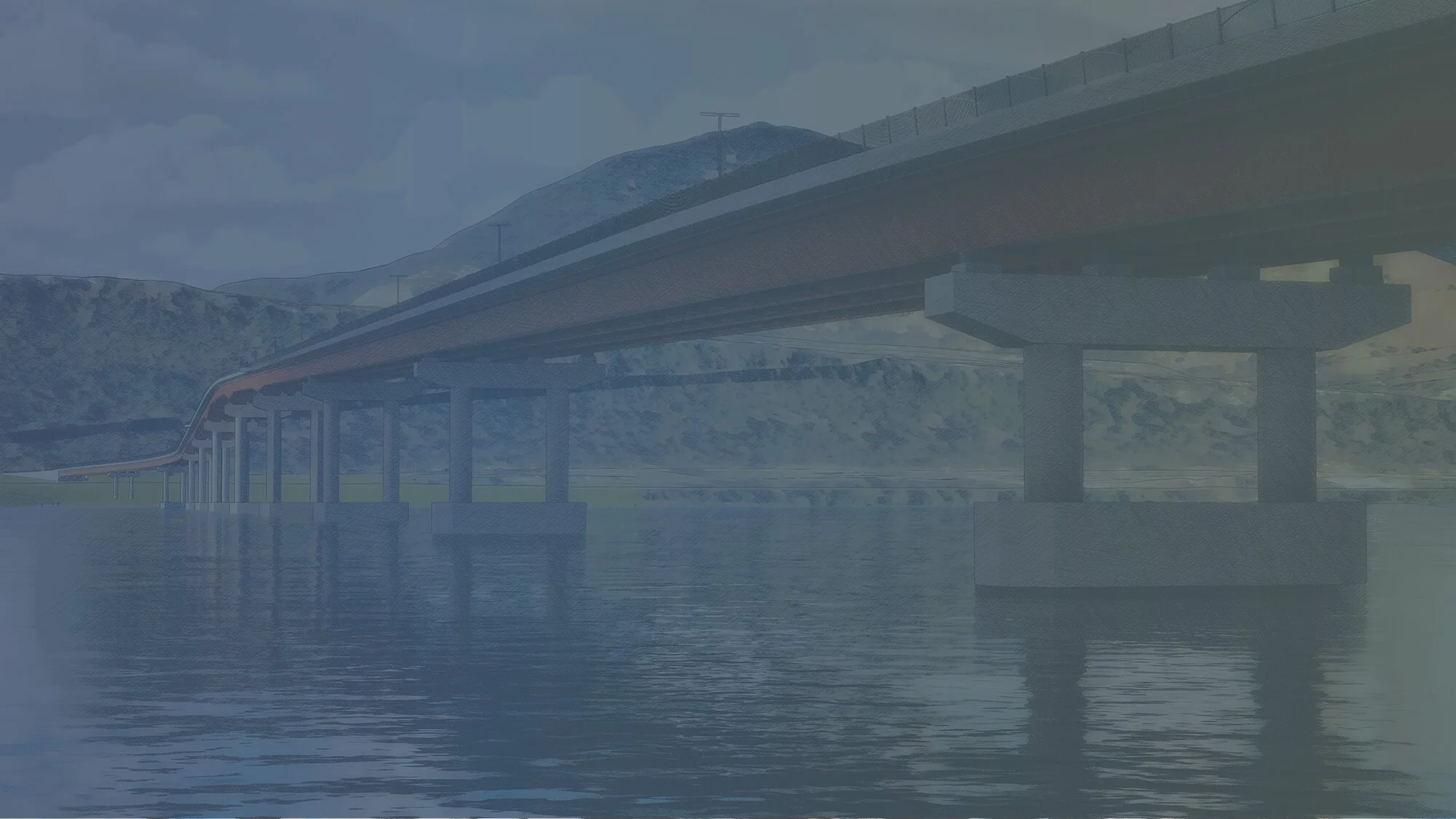
The new bridge will be a modern, steel structure supported by concrete piers. It will feature one 12-foot vehicle travel lane in each direction with 4-foot shoulders, two 5-foot directional bicycle paths, and a dedicated 8-foot pedestrian path on its west side.
-
Yes. The construction plan is designed to keep the existing bridge open throughout the build. Drivers, commuters, and freight operators will be able to continue crossing without interruption while the new bridge is built alongside the existing bridge. Only at the end of construction, when completing the tie-ins at each side, will there be minor delays.
-
Pending final federal funding approval, construction is scheduled to start in October 2027. The project is targeting a 2031 opening. Bridge design began in September 2025 and a final, construction-ready set of plans is due in spring 2027. The project concluded federal environmental review in November 2025, and has requested the remaining federal funding needed to move into construction in fall 2027.
Design and Features
-
The new bridge will have one 12-foot travel lane in each direction, each with 4-foot shoulders — a major improvement over the existing bridge’s two very narrow, shoulder-less lanes. The wider lanes and shoulders will safely accommodate modern freight trucks, emergency vehicles, and everyday traffic.
-
Yes. The new bridge will include two 5-foot directional bicycle paths and a dedicated 8-foot pedestrian path. Today, there is no safe way for people walking or biking to cross the river at this location. The new facilities will be physically separated from vehicle traffic, and in the event of an emergency, can accommodate emergency vehicles. This improvement directly reflects community input and supports the Hood River region’s strong outdoor recreation and active transportation culture.
-
Yes. One of the most significant deficiencies of the existing bridge is that it cannot accommodate many modern freight trucks or certain emergency vehicles due to its narrow lanes and weight restrictions. The new bridge is designed to meet modern standards and will be fully accessible to freight, oversized loads, and all emergency vehicle types.
-
The new bridge will provide 450 feet of navigational clearance – nearly double the 246-foot clearance available today. This is a major safety improvement for barge operators and commercial river traffic navigating the Columbia River Gorge’s strong winds and currents.
-
Yes. The new bridge will be designed and built to current seismic standards. The 1924 bridge was constructed long before modern seismic requirements and does not meet today’s design standards. Seismic resilience is a core requirement of the new bridge’s design.
Cost and Funding
-
From start to finish, the project is estimated to cost $1.12 billion. This figure includes are $775 million for the construction of the bridge, $109 million for the demolition of the existing bridge, around $115 million for planning and design, and a $121 million contingency to protect against overages. This estimate reflects the full complexity of replacing a major interstate river crossing, including modern lane widths, seismic requirements, the navigational clearance upgrade, multimodal infrastructure, and construction in a challenging, sensitive river environment. See funding information here.
-
Funding comes from a combination of federal, state, and local sources. To date, more than $563 million has been secured. This includes $200 million from a federal INFRA grant, and $125 million each from Oregon and Washington. Around $105 million in local match will be provided via a federal TIFIA loan that will be repaid with future toll revenue. The Bridge Authority is actively pursuing the final $532 million through the federal Bridge Investment Program (BIP).
-
The project is built on a diversified funding strategy and does not rely on any single source. With more than half the project cost already secured, we are advancing design and pre-construction work now while simultaneously pursuing final construction funding and exploring additional financing options. The Bridge Authority is committed to delivering this project and is managing funding and design timelines in parallel to avoid losing momentum.
Tolling
-
The Hood River-White Salmon Bridge has been tolled since it opened in 1924. Today, the toll for a standard passenger vehicle is $3.50 per crossing, or $1.75 for drivers using a BreezeBy transponder.
-
Yes. Like the existing bridge, the new bridge will be tolled. In addition to covering operations and maintenance, toll revenue will help repay the $105 million federal TIFIA loan that is part of the project’s construction financing. The toll structure for the new bridge has not yet been finalized and will go through a public process before rates are set.
-
Tolls will be collected electronically, and there will not be a physical toll booth. The Bridge Authority is working to determine which transponder system it will use.
-
Toll rates will be set by the Hood River-White Salmon Bridge Authority through a transparent public process that includes community input. While the Authority has developed a projected toll schedule, final rates will depend on factors including traffic volume and interest rates. The Authority is committed to a fair and open process, and decisions will reflect the needs of daily commuters, local businesses, and freight operators.
-
The existing BreezeBy program provides a 50% discount for transponder holders, and the Bridge Authority is committed to continuning relief for frequent users. As toll rates for the new bridge are developed, the needs of local commuters and frequent users will be a central consideration and the Bridge Authority is committed to maintaining affordable access for those who rely on the bridge most.
Construction and Community Impact
-
Pending final federal funding approval, construction is scheduled to start in October 2027, with a targeted opening of 2031.
-
Minimizing disruption to the Hood River, White Salmon, and Bingen communities is a core priority. Because the new bridge will be built alongside the existing one, the current crossing will remain open throughout construction, protecting daily commerce and commuter access. During construction, the project team will engage directly with any affected businesses and property owners, and a community liaison process will be in place to ensure questions and concerns are heard and addressed promptly.
-
The project team is working closely with river users, barge operators, and recreation stakeholders to manage impacts during construction. During certain phases of construction, some temporary restrictions near the work zone will be necessary for safety and will be communicated well in advance. When complete, the new bridge’s expanded 450-foot navigational clearance will be a lasting improvement for all river users.
-
The Bridge Authority is committed to active community engagement throughout construction. Property owners and businesses near the project corridor are encouraged to attend public meetings, sign up for project updates, and contact the project team directly. Details on how to connect with the project team are available on the project website. Click here for contact information.
Governance and Oversight
-
The Hood River-White Salmon Bridge Authority is the governing body responsible for delivering the bridge replacement project. The Authority was formed in 2023 and includes equal representation from both Oregon and Washington. It works closely with ODOT, WSDOT, federal agencies, and local governments throughout planning, design, and construction. The Authority is responsible for contracting, funding, public engagement, and project delivery.
-
Twelve commissioners make up the Authority’s board – six voting members and six alternates, with half appointed by Klickitat County, Washington, and half appointed by Hood River County, Oregon. See commissioner biographies.
-
Kiewit Infrastructure West, one of North America’s most experienced construction and engineering firms, was selected through a competitive procurement process to serve as the project’s design-build contractor. Kiewit brings deep expertise in complex bridge construction and will be responsible for completing the design and managing construction through project delivery. The design-build contract with Kiewit includes provisions specifically designed to manage cost risk, and the design phase is structured to establish firm cost controls before construction begins. The Bridge Authority is committed to regular, transparent public reporting on budget performance. Taxpayer and ratepayer accountability are built into how this project is governed.
-
The Bridge Authority is committed to keeping the public informed and engaged throughout the project. Updates will be shared through the project website, public meetings, and direct outreach to stakeholders. Community members are encouraged to sign up for project updates, attend public meetings, and reach out to the project team with questions or concerns. This is a community bridge, and the community’s voice matters in how it gets built.