

Since September 2025, engineers have been designing the future Hood River-White Salmon Bridge. Now, as the project reaches the 60% design milestone, the replacement bridge is taking shape as engineering decisions are refined and the details of the future crossing continue to come into focus.
As design progresses, you’ll hear more engineering and construction terms in project updates. This Bridge Basics post introduces the major components of the new bridge, explains what they do, and highlights how they’re being incorporated into the design.
While bridges may appear simple from above, they are carefully engineered systems made up of many interconnected parts. Every component has a specific role: carrying weight, transferring forces, allowing movement, or connecting the structure together. Together, they create a bridge capable of safely carrying people and goods across the Columbia River.
Note: All bridge illustrations shown on this blog post are early design concepts.
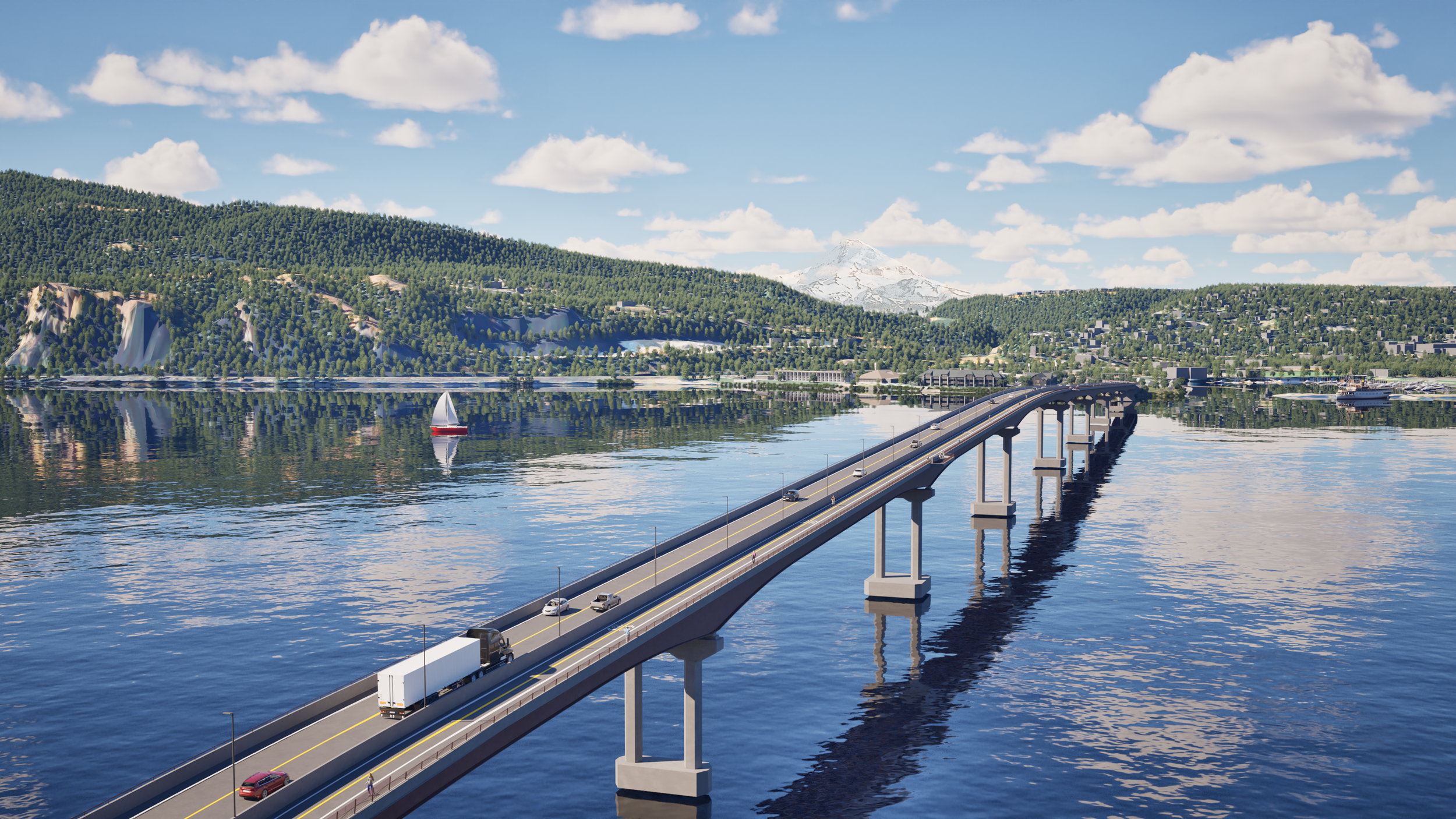
An early design rendering of the new Hood River-White Salmon Bridge.
Built in Pieces, Designed to Perform as One
Although a bridge is built piece by piece, it is designed to function as one continuous system. Each component works together to support the structure, carry loads, and accommodate the forces the bridge experiences every day.
As traffic crosses the bridge, winds sweep through the Columbia River Gorge, temperatures rise and fall, and river currents push against the supports below, the structure responds with small, controlled movements. This flexibility is a normal and important part of how bridges withstand changing conditions.
The replacement bridge is designed to meet modern safety standards and perform reliably during both everyday conditions and extreme events, including earthquakes and potential vessel collisions. Together, its components provide the strength and resilience needed to keep travelers and goods moving safely throughout the region.
The Parts That Make the Bridge Work
A bridge is more than the roadway you see every day. It takes many different parts working together, each with its own job. Let's take a closer look at some of the key components of the new bridge and the role each one plays in making the crossing work.
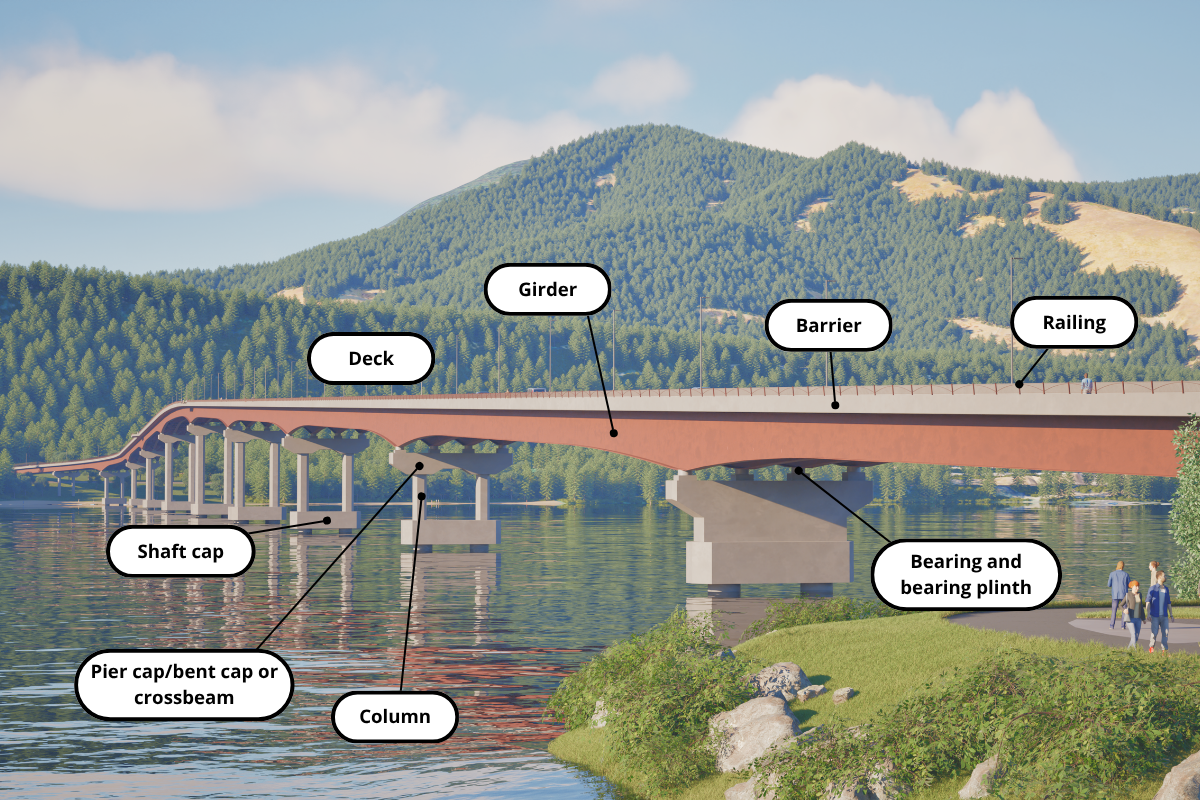
A rendering of the new bridge with labeled design components.
Deck
The deck is the surface people use every day. On the new bridge, the deck will include roadway, shoulders, and a separated shared-use path for people walking, rolling, and biking and provide a safer and more comfortable experience for multimodal travel between Hood River and White Salmon. In emergencies, the shared-use path can be used for first responder vehicle access.
Girders
Girders are large steel beams beneath the deck that support the bridge and carry loads to the supports below. The new bridge will use weathering steel girders that allow longer spans, helping reduce the number of piers needed in the river.
Piers and Bents
Piers are the support structures that hold the bridge up between the two shorelines. A bent is the framework of columns and beams that form the visible portion of a pier. Their placement has been carefully designed to support the bridge while maintaining navigation through this section of the Columbia River.
Columns
Columns are designed to withstand the demands of a major river crossing, helping provide the strength and stability needed for the nearly mile-long bridge.
Pier Cap
A pier cap is the beam that sits across the top of the columns. It helps distribute weight from the girders to the columns below, allowing forces to move efficiently through the structure.
How These Pieces Work Together
When a vehicle, bicyclist, or pedestrian crosses the bridge, their weight will move through a sequence of structural elements:
The deck supports vehicles, bicyclists, and pedestrians.
The girders carry the weight load along the bridge.
Pier caps distribute loads to the columns.
Columns transfer forces to the foundation.
Foundations anchor the bridge into the ground.
Together, these components safely carry traffic across the river every day.
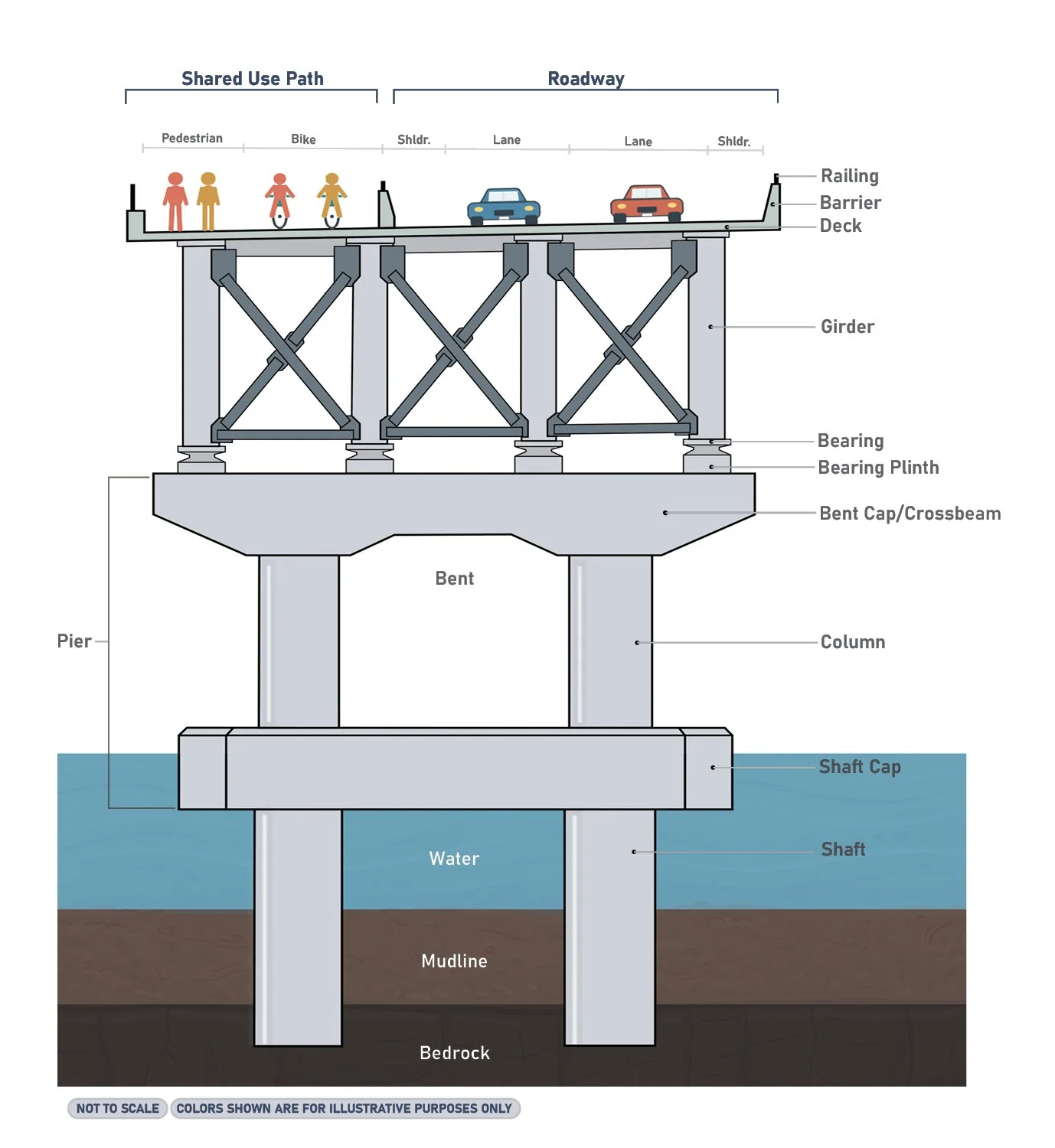
A cross-sectional drawing of the new bridge with labeled design components.
Designed for the Columbia River
At approximately 4,400 feet long, the bridge is designed to meet the unique conditions of the Columbia River Gorge, including strong winds, river currents, changing temperatures, and seismic activity.
A long central span will provide a wider navigation channel for marine traffic while reducing the number of supports needed in the water. The bridge is designed to provide a durable and reliable crossing for generations.
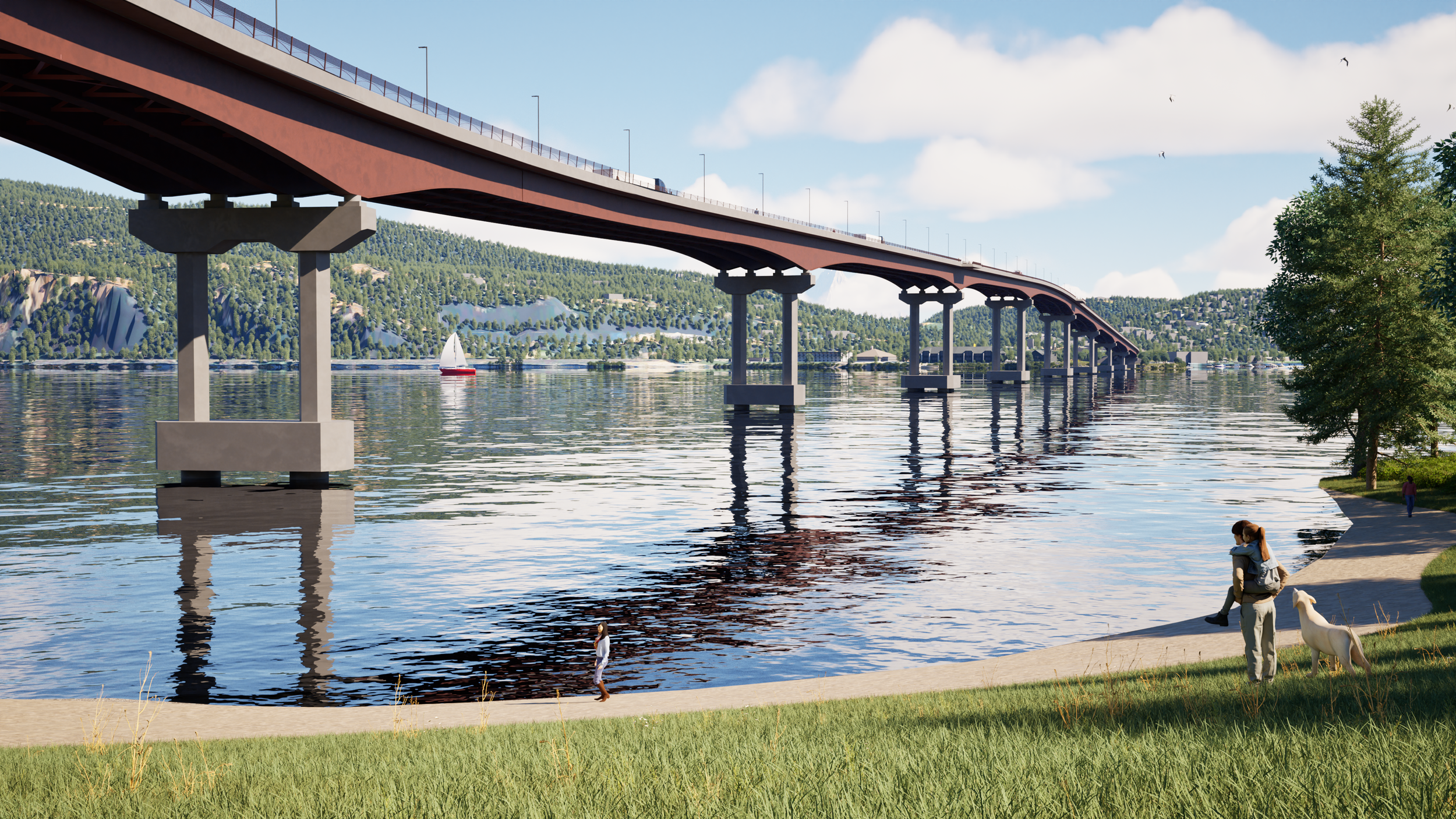
A rendering from the Washington State side of the new bridge.
As design progresses, we'll continue exploring the engineering, materials, and construction methods that will bring the new Hood River-White Salmon Bridge to life. Stay tuned for more Bridge Basics.