

A strong bridge starts with a strong foundation. When building a bridge across the Columbia River, that means understanding conditions deep beneath the surface. To design a safe and resilient replacement for the Hood River-White Salmon Bridge, engineers must look below the riverbed for answers.
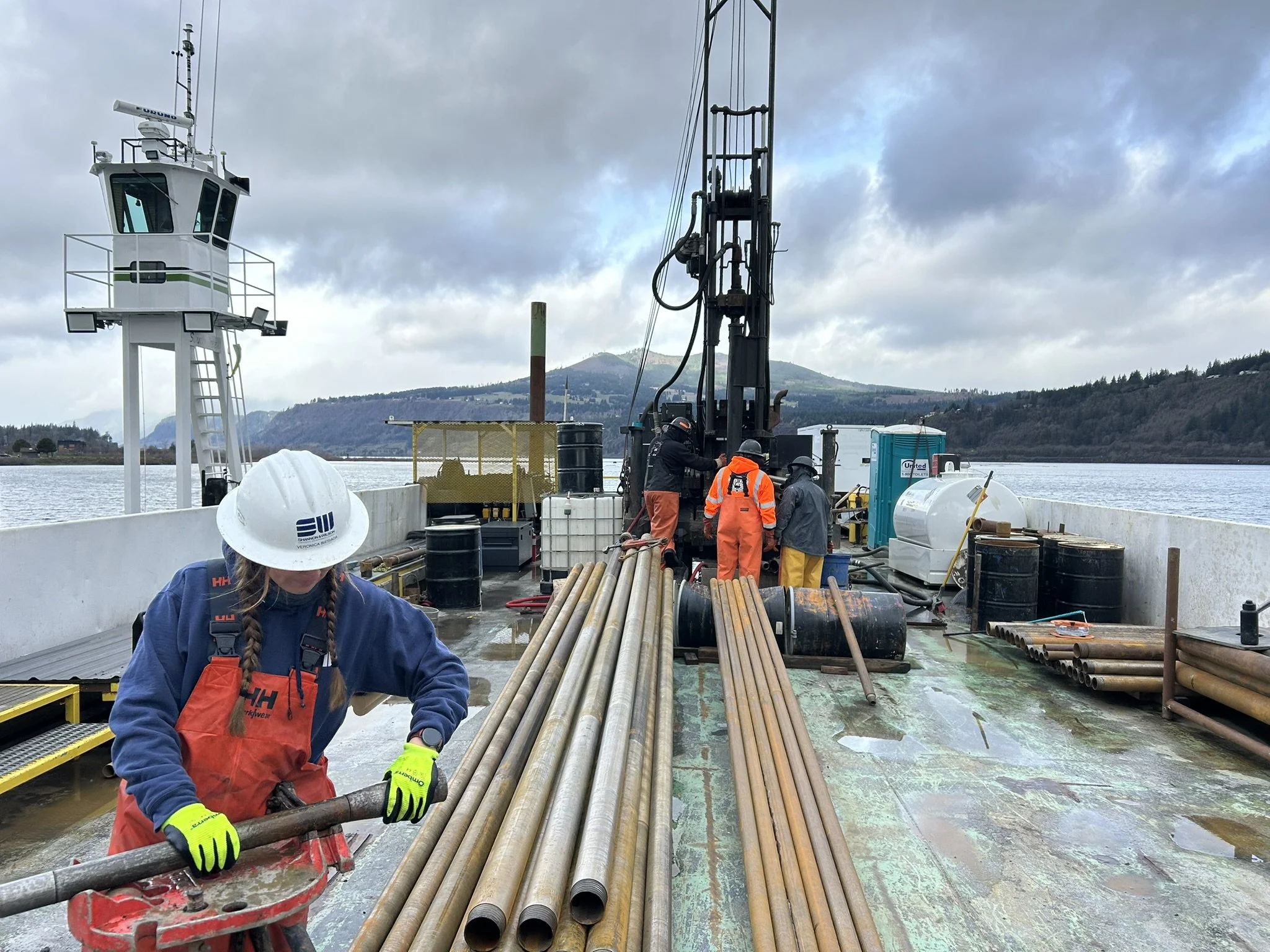
Geotechnical Testing
As part of final design work to replace the 101-year-old bridge, a team of geotechnical subcontractors from Washington and Oregon, working under Kiewit Engineering Group, Inc., is conducting geotechnical investigations in the Columbia River. This work helps engineers understand what lies beneath the river and nearby land where the new bridge will be built.
What is geotechnical work and why is it important?
Geotechnical work is how engineers study the soil, rock, and groundwater to determine the ground’s strength and stability. Using barges equipped with drill rigs, crews drill into the riverbed and surrounding areas to collect soil and bedrock samples. The data gathered allows engineers to predict how the ground will behave over time and design safe, long-lasting bridge foundations.
What work is happening now?
Geotechnical engineers have brought barges onto the river to investigate and study conditions between River Mile 167 and River Mile 170. They expect to continue their analysis through summer 2026.
Crews are using one large and one small barge equipped with drill rigs to test bedrock strength, collect soil samples, and gather other data to inform the bridge’s design, sometimes from as deep as 200 feet below the riverbed.
What will the public see?
The smaller barge will most often be visible in the shallower parts of the Columbia River, while the larger barge will operate in the river’s deepest sections. So far, findings align with what engineers expected and confirm the soil and bedrock conditions at various locations along the riverbed near the bridge.
Marine navigation and river operations will remain open during this work, including access to the White Salmon Treaty Fishing Access Site. People using the river may see barges or equipment operating near the bridge while testing is underway, but the navigational channel through the existing bridge will stay open, and marine traffic will continue to move through the area. River users are asked to be extra cautious near active work zones. At times, there may also be short‑term lane restrictions or traffic control on the Hood River Bridge, so travelers may want to allow a little extra time when crossing.
When the geotechnical investigations wrap up, the project team will have a much clearer understanding of the riverbed that will support the new Hood River–White Salmon Bridge. The engineers can move forward with confidence in foundation choices that lay the groundwork for designing a safe, modern, and strong crossing for people who cross the Columbia River. This geotechnical work will help the future bridge perform reliably for future generations’ connections, travel, and economy.
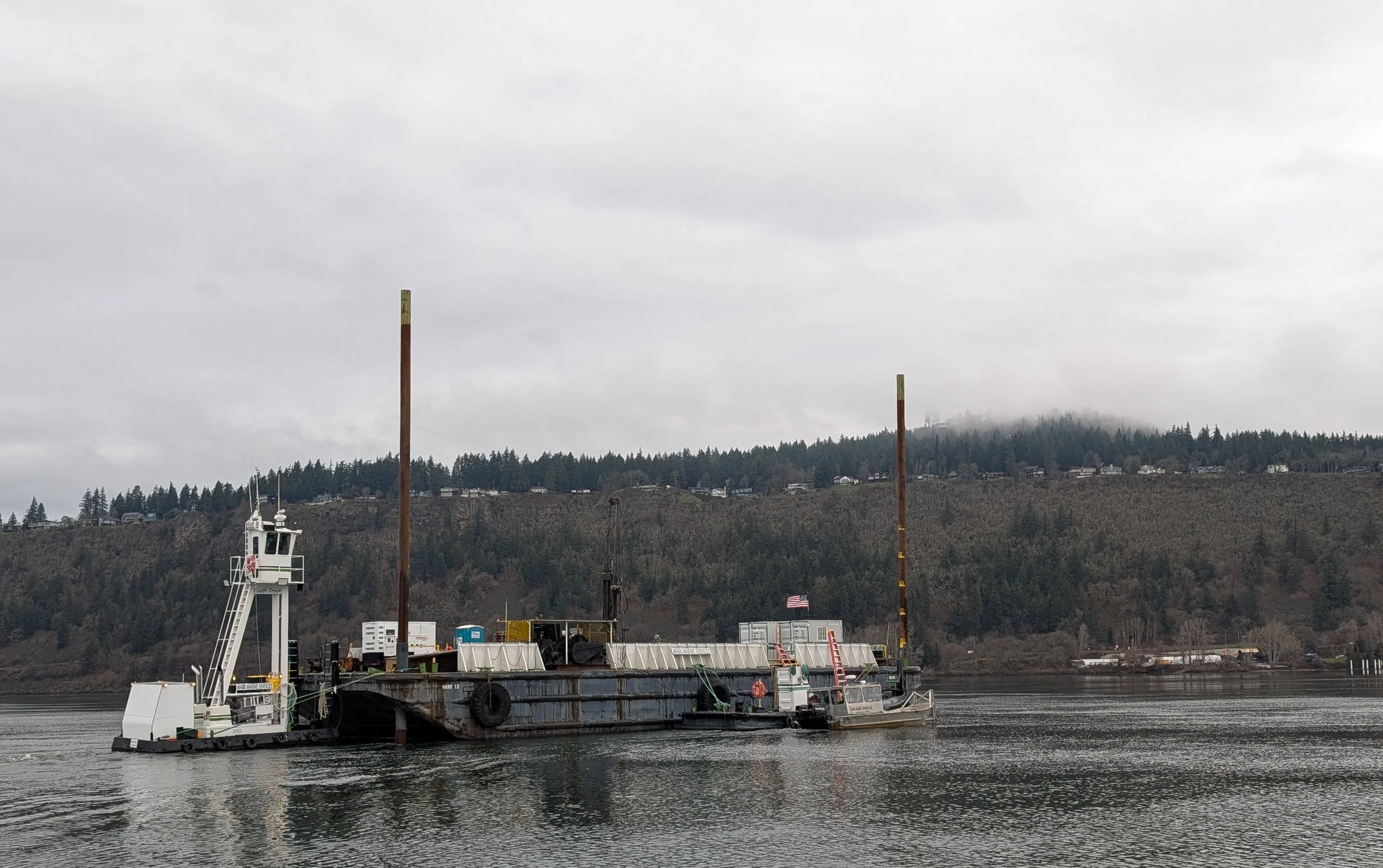
Riverbed Testing in Progress
A geotechnical barge conducting investigations for the Hood River-White Salmon Bridge Project on the Columbia River.