

Environmental Planning Is About More Than Permits
The existing Hood River-White Salmon Bridge was built nearly a century ago, before many of today's environmental standards, water quality protections, and construction best practices existed. As plans for a replacement bridge have progressed, the project team has incorporated modern approaches that better protect the Columbia River and surrounding environments.
Environmental planning has played an important role throughout project development. By studying the river, surrounding habitat, cultural resources, and community needs, the team has identified opportunities to reduce impacts and improve environmental outcomes.
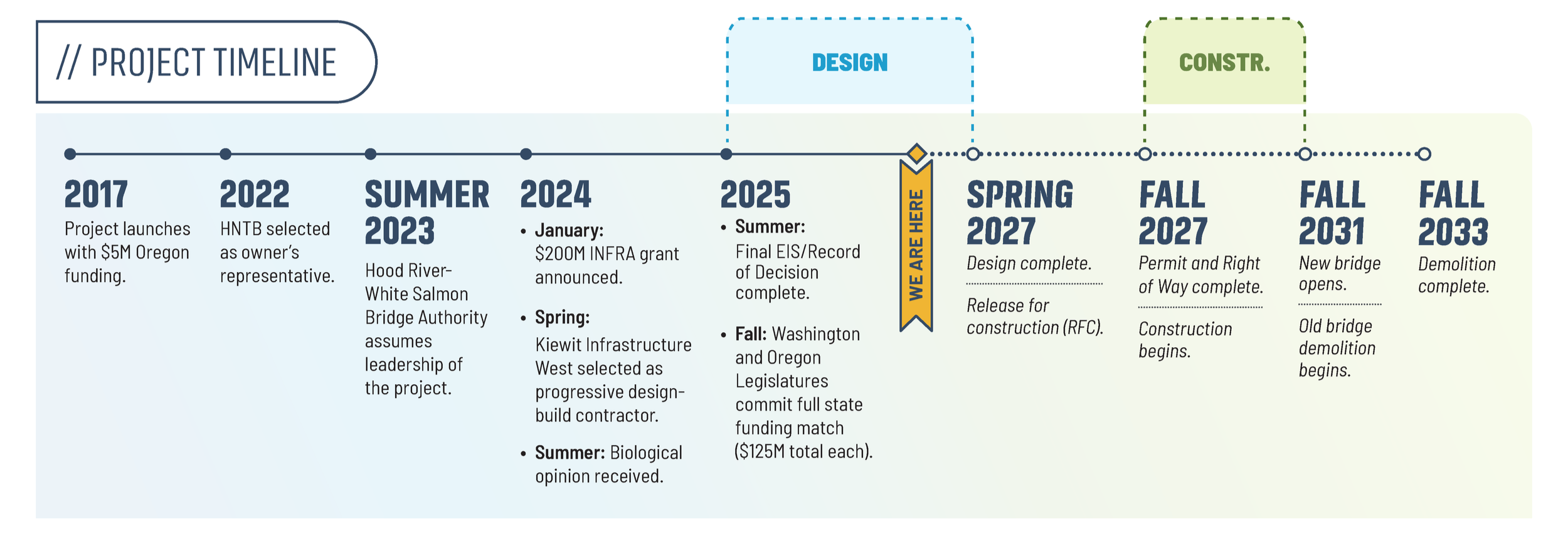
Project timeline for the Hood River-White Salmon Bridge Replacement Project (As of Fall 2026)
The result is more than a replacement bridge. It is an opportunity to deliver meaningful environmental improvements over the Columbia River while providing a safer, reliable connection between Oregon and Washington.
Environmental Review: Understanding the Project's Surroundings
Before design decisions could be made, the project team needed a clear understanding of the environment surrounding the bridge. The project's major environmental review process, completed in 2025, examined a wide range of environmental and community factors, from water quality and fish habitat to Tribal resources, recreation, and river navigation. The team worked to understand how the replacement bridge could meet the region's transportation needs while minimizing impacts. The information gathered through environmental studies helped identify opportunities to refine the design, improve environmental outcomes, and better serve the people and natural resources that depend on the river.
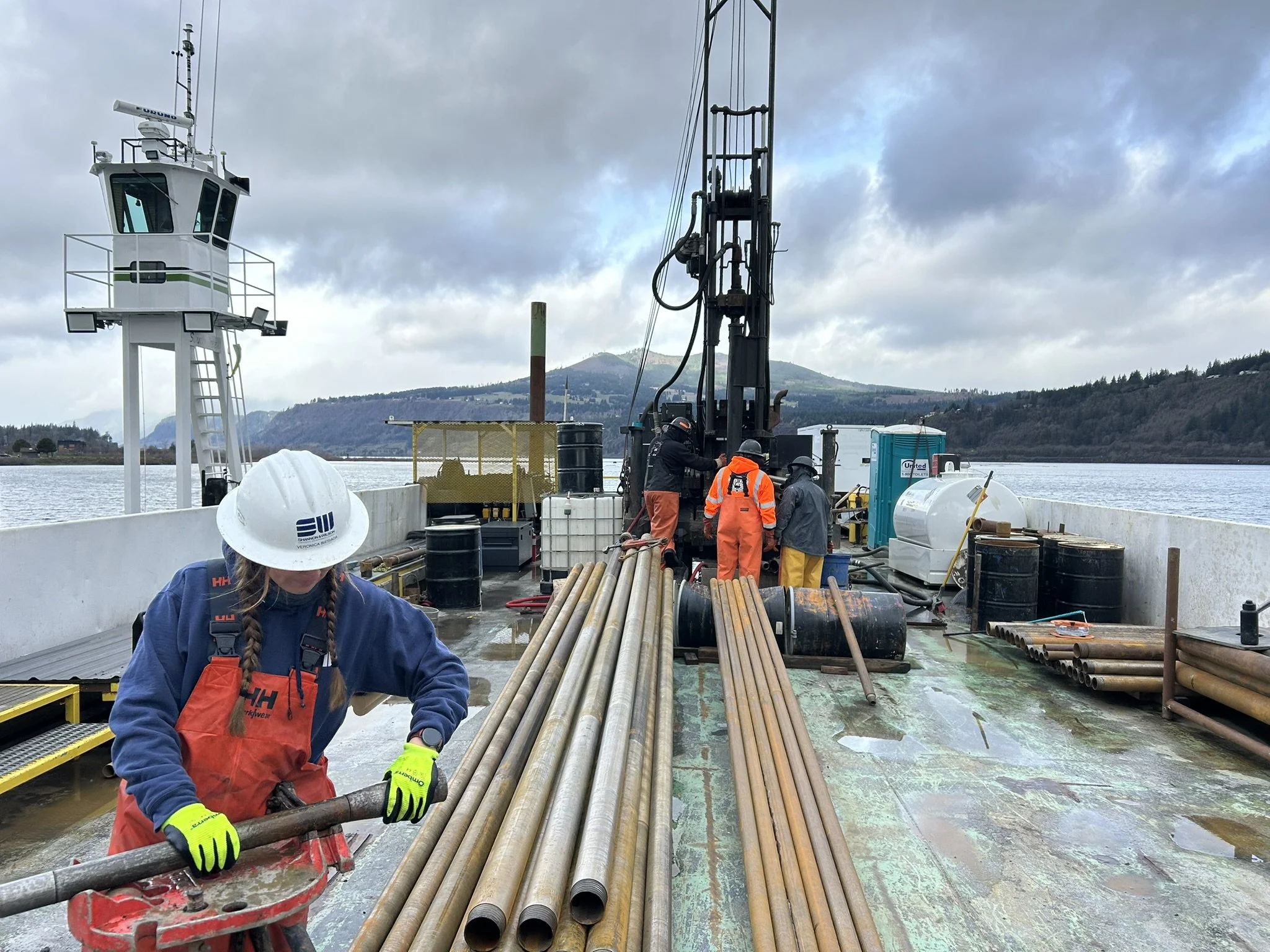
A team conducting geotechnical testing in the Columbia River. This work helps engineers understand what lies beneath the river and nearby land where the replacement bridge will be built.
A Better Bridge for the Columbia River
This environmental review led to a bridge design that improves the existing crossing in several important ways. From cleaner water and healthier habitats, to reduced impacts during construction, the replacement bridge includes a number of environmental improvements that will benefit the Columbia River and surrounding communities for years to come.
Building Smarter
One of the most significant design refinements occurred in 2024, when the project transitioned from a concrete bridge concept to a steel girder bridge design. The change allowed the project team to reduce the amount of infrastructure needed in the Columbia River while also simplifying construction.
Key benefits of the steel design include:
Longer spans between supports, reducing the number of in-water piers from 12 to 9.
A significant portion of the bridge can be fabricated off-site and assembled at the project location.
Less construction activity is required directly over the water.
Reduced time working in the river environment, minimizing potential impacts to aquatic resources.
A slimmer bridge profile that better complements the scenic character of the Columbia River Gorge.
Reducing the number of in-water piers means a smaller footprint in the Columbia River, less disturbance during construction, and more room for habitat and navigation. Earlier concepts would have required more than 3,000 square feet of foundation area in the river. Today’s design has reduced that foundation footprint to approximately 1,800 square feet.
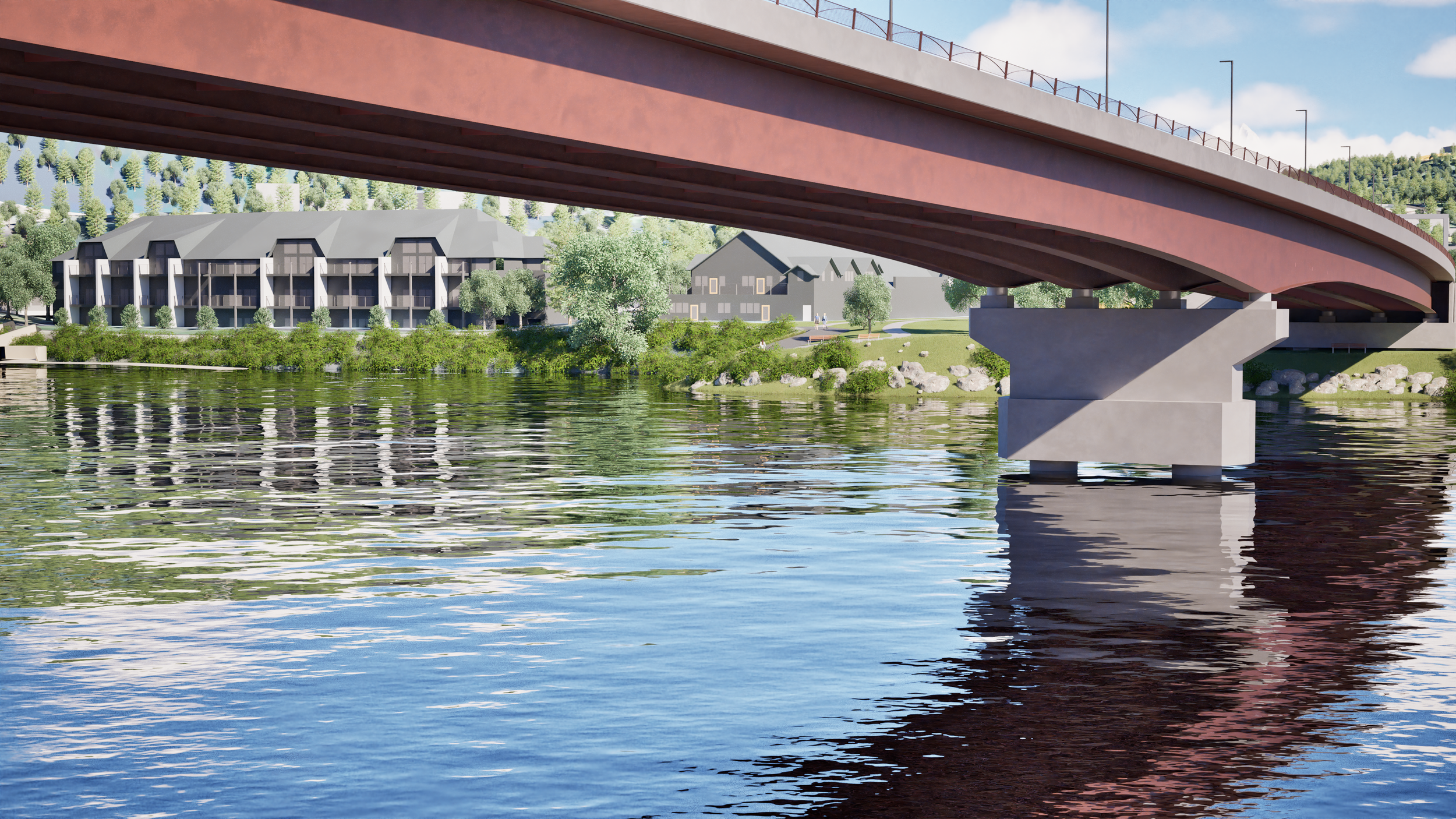
Design refinements reduced the number of in-water piers from 12 to 9, decreasing the bridge footprint in the Columbia River.
Cleaner Water and Healthier Habitat
Clean water is vital to everyone who depends on the Columbia River, from fish and wildlife to the communities that rely on it for recreation, commerce, and natural beauty.
Every time it rains, water runs off roadways carrying pollutants into nearby waterways. These pollutants include petroleum-based fluids, metals from vehicle wear, and particles from tires and brake pads.
Unlike the existing bridge, the replacement Hood River-White Salmon Bridge will include modern stormwater treatment systems that capture and treat roadway runoff before it reaches the Columbia River. The replacement bridge will provide significantly improved stormwater treatment, helping protect water quality and aquatic habitat.
Did You Know?
Reducing the number of piers in the Columbia River benefits more than just navigation and water quality. Bridge piers and other in-water structures can create places for predator fish to gather and provide perches for birds that feed on juvenile salmon. By reducing the bridge's footprint in the river, the project helps limit these conditions and supports a healthier environment for protected fish, including salmon.
Looking Ahead
Environmental Stewardship Continues Through Construction
The environmental story of the replacement Hood River-White Salmon Bridge is ultimately a story of continuous improvement. As studies were completed and the design advanced, the project team identified opportunities to reduce impacts, improve water quality protections, minimize the bridge footprint in the Columbia River, and better accommodate the surrounding environment.
Those improvements are helping create a bridge that will be a significant environmental upgrade from the existing crossing. At the same time, environmental commitments will continue to guide final design, permitting, and construction planning to help ensure those benefits are realized.
The result will be a safer, more reliable bridge that serves the region's transportation needs while providing lasting environmental benefits for the Columbia River, surrounding habitats, and future generations. Stay tuned for more Bridge Basics.